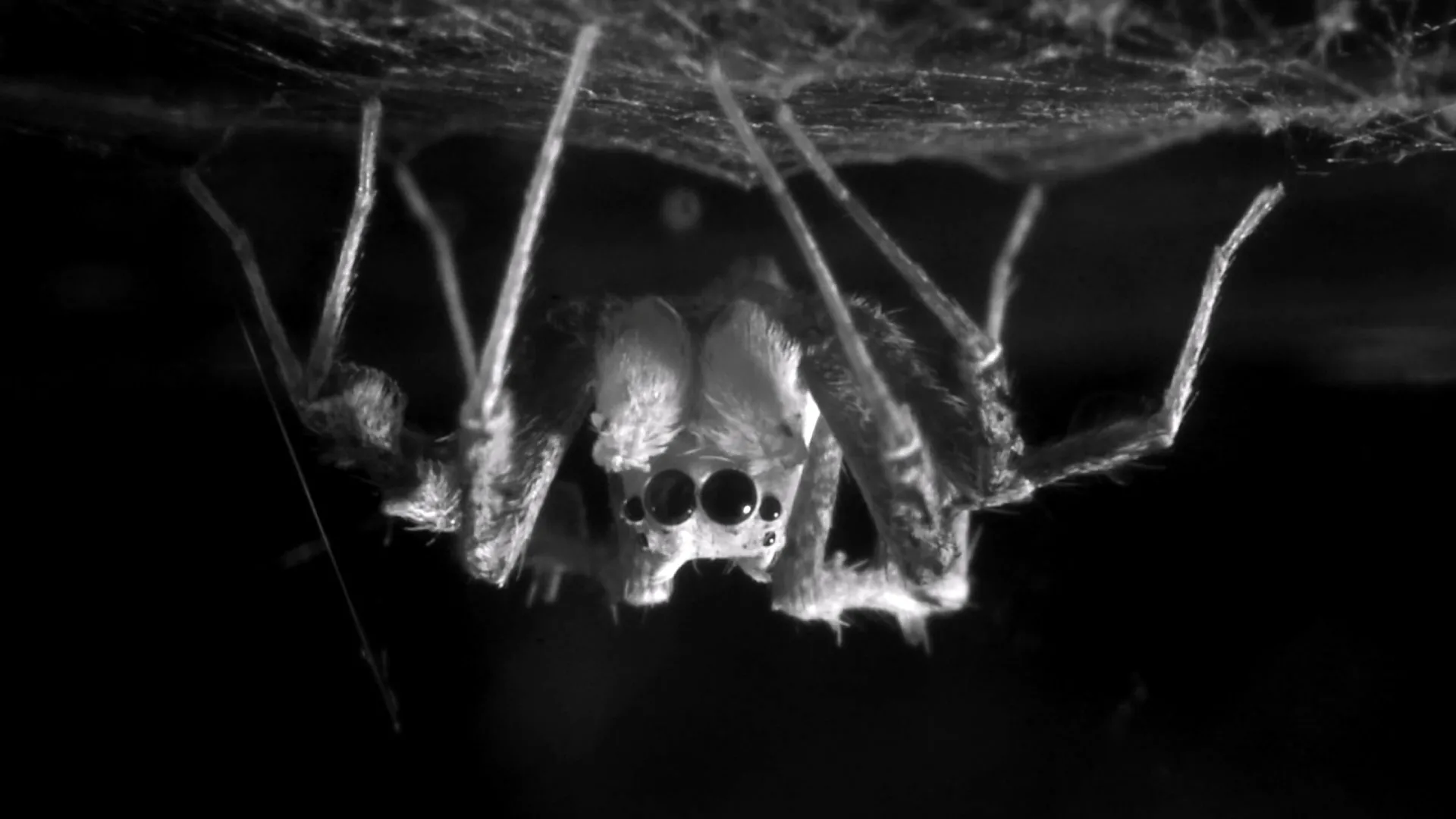
Researchers at the University of Bonn report that spiders pass through separate stages of sleep, one of which resembles the rapid eye movement (REM) phase seen in humans. According to Science Daily, the team observed the Australian jumping spider Portia fimbriata moving its eyes and twitching its muscles during this stage, mirroring behavior linked to REM sleep in vertebrates. The work, carried out at the university's Institute of Organismic Biology, is described as the first thorough experimental confirmation that spiders sleep in a regulated way rather than merely going quiet.
Why it matters
Almost everything science knows about sleep comes from vertebrates, mainly mammals and birds. Finding comparable sleep features in an animal with a very different nervous system could help researchers work out when and why the different types of sleep appeared during evolution. The Bonn findings, as reported by Science Daily, also open questions about whether creatures with radically different wiring share basic sleep functions. The researchers say the results point toward behavioral science, neuroscience and chronobiology — the study of biological rhythms — as areas where the discovery could matter.
A spider that hunts other spiders
Portia fimbriata is small, roughly the size of a one-euro coin when fully grown, but it is an unusually capable predator. Rather than mainly catching insects, members of the genus Portia target other spiders. They deploy a range of tricks, including mimicking the vibrations of an insect struggling in a web. Those false signals can draw a web-building spider out toward what looks like an easy meal, where the hunting Portia is waiting instead. Science Daily reports that such behavior suggests unusual learning abilities, which is part of why the species is a useful subject for studying the links between sleep, nervous system function and cognition.
